Home › Asphalt Pathways, Sidewalks, and Trails
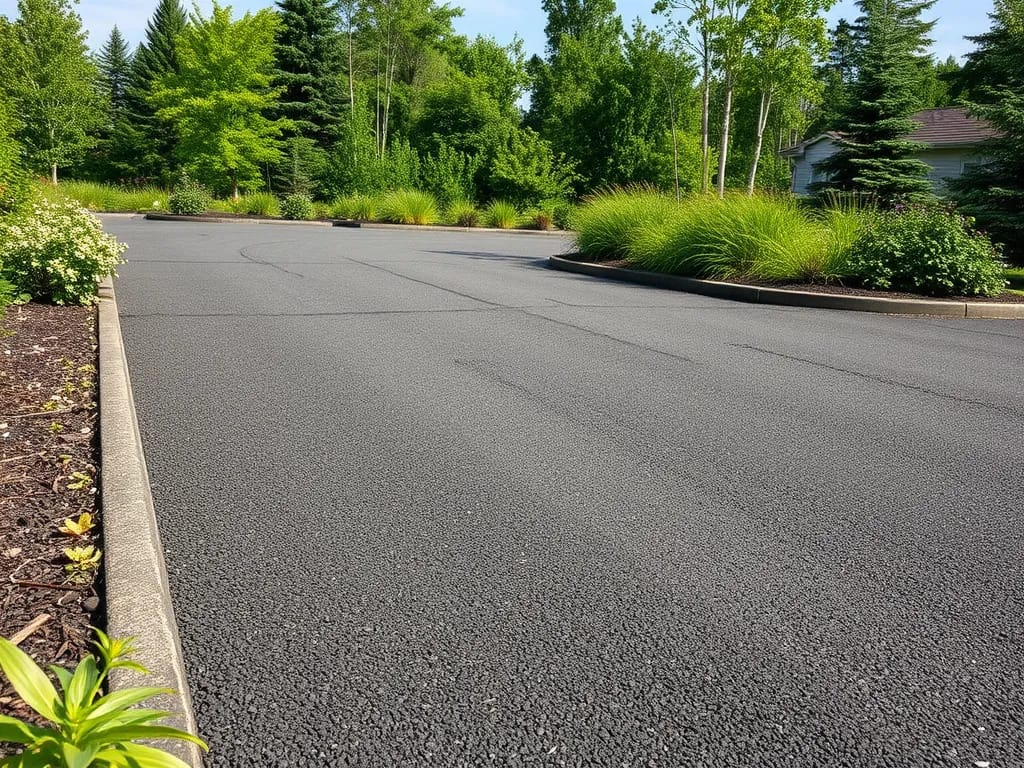
Connect your property with smooth, accessible routes through asphalt pathway paving in Fayetteville, NC. We build walking paths, sidewalks, and multi-use trails for parks, schools, and commercial campuses that are comfortable to walk on and easy to maintain.
Precision Asphalt Fayetteville provides professional asphalt pathway paving throughout Fayetteville, NC, North Carolina and the surrounding area. Our licensed, insured crew delivers safe, clean, on-time work with a free estimate before anything begins. Call (910) 659-3742 or request your free quote.
Asphalt Pathways, Sidewalks, and Trails in Fayetteville NC
Asphalt pathways, sidewalks, and trails need to be built for how people actually use them, not just how they look on a drawing. At Precision Asphalt Fayetteville, we focus on pathways that stand up to Fayetteville traffic, tree roots, and summer heat without constant patching.
We install asphalt walking paths for neighborhoods, commercial sites, schools, churches, and public spaces across Fayetteville and Cumberland County. That includes straightforward straight-shot sidewalks from parking lots to doors, curved walking loops around retention ponds, and multi-use paths for bikes and strollers. Whether you need a single connector path from your driveway to your front door or a full walking network inside an HOA, we size the design and materials to your actual use instead of a one-size-fits-all approach.
Our team is used to working in tight, finished spaces, not just open parking lots. That means protecting turf and landscaping, coordinating with sprinkler systems, and keeping access open for residents or customers while work is underway. We also know local soils and drainage patterns, so we can recommend details like extra base depth where clay stays soft, or minor elevation changes to prevent Fayetteville rainstorms from washing across your new pathway.
Site inspection, layout, and drainage planning
Before any asphalt is ordered, Precision Asphalt Fayetteville starts with a site visit. We walk the full path alignment, check elevations with a level, and look closely at how water currently moves across the property. Many pathway problems start with poor drainage, not the asphalt mix itself.
We identify whether the subgrade is tight red clay, loose fill dirt, or mixed materials from old construction. In Fayetteville, clay-heavy areas often need more attention because they hold water and soften. On slopes or near drainage swales, we may recommend slight shifts in alignment or small retaining edges to keep the pathway from raveling at the sides.
Layout is then marked with paint and string lines, including width and curves. Typical walking paths are 4 to 6 feet wide, while shared-use paths that see bikes and maintenance carts may go 8 to 10 feet. We design cross slope (a gentle tilt across the width) so water sheds off the pavement instead of puddling on it, usually around 2 percent. For commercial sites, we also verify that slopes and widths line up with ADA accessibility expectations where applicable, such as around building entrances and parking areas.
If the project is part of a larger commercial or municipal plan, we coordinate with provided engineering drawings. For private HOAs or small businesses without stamped plans, we prepare a practical layout and discuss it on site so you can see exactly where the path will run, how it will tie into existing concrete, and where we need to cut or match to existing pavements.
Excavation, base installation, and edging options
Good asphalt pathway paving starts below the surface. For new paths, we excavate the footprint to the required depth, usually 6 to 10 inches depending on soil and expected load. For simple residential walkways with foot traffic only, total depth may be toward the lower end. For golf carts, service vehicles, or light maintenance trucks, we deepen the base and sometimes recommend thicker asphalt.
We then place and compact a crushed stone base, most often a graded aggregate base that locks together well under compaction. In Fayetteville's softer soils, we may add geotextile fabric under the stone to keep the base material from pumping into the clay over time. Base is compacted in thin lifts using plate compactors and small rollers to get a dense support layer, which is what keeps your pathway from settling and cracking.
Edging is another key decision. For basic residential paths that wind through yards, we often install a compacted gravel shoulder and leave the edge exposed. For commercial sidewalks, tighter HOAs, or areas with frequent mower traffic, we may recommend concrete ribbon curbs, pre-cast paver edging, or a slightly raised asphalt edge with extra compaction. Solid edging keeps the sides from breaking off when lawn crews run wheels right on the edge.
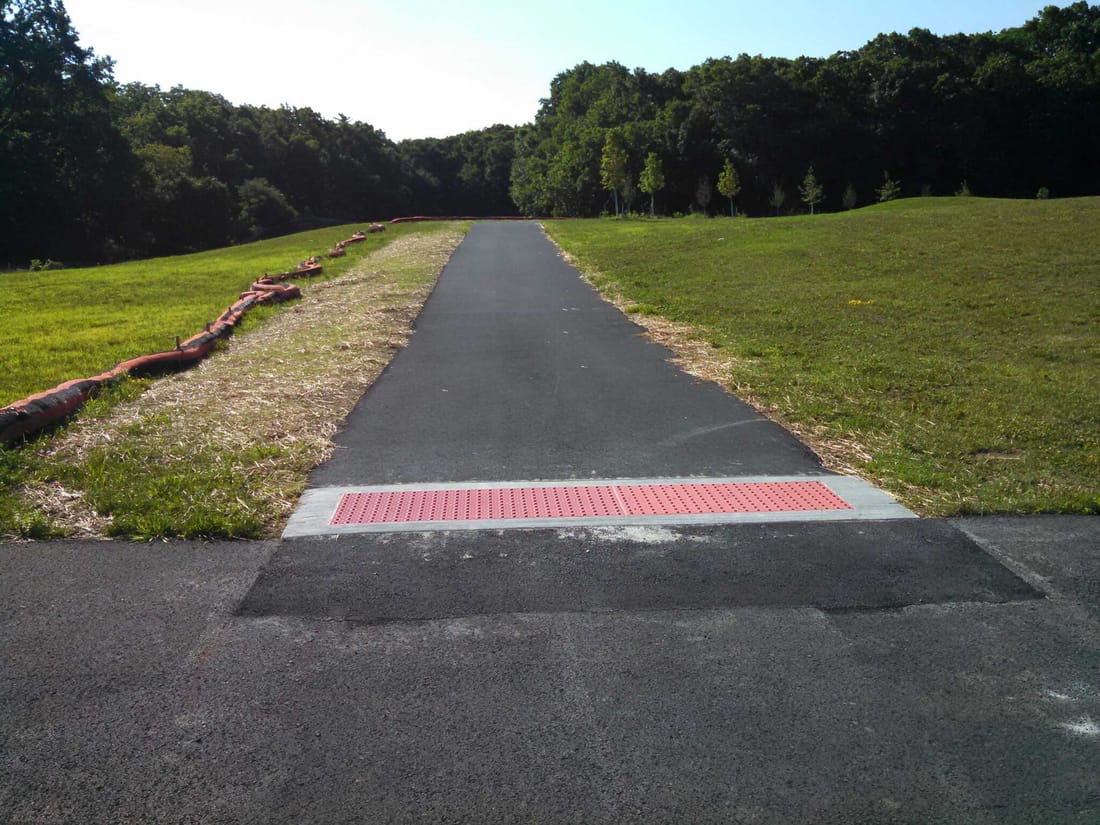
Where a new asphalt path ties into existing concrete steps, patios, or sidewalks, we saw cut clean joints and adjust base depth so finished surfaces match without trip lips. On commercial projects, slight bevels or tapers are used at transitions to satisfy accessibility and reduce the chance of damage from carts or hand trucks.
Asphalt paving process, thickness, and surface options
Once the base is ready, Precision Asphalt Fayetteville installs the asphalt mat itself. For pathways and sidewalks, we typically use a fine-graded surface mix that compacts into a smoother finish than standard driveway or parking lot mixes. This makes walking and rolling carts more comfortable and reduces trip hazards from large aggregate.
Pathway thickness usually runs between 2 and 3 inches compacted. Light-use residential paths can sometimes be 2 inches, while HOA walking loops, school trails, and maintenance routes often benefit from 2.5 to 3 inches. Heavier sections that see truck loading at short crossings or dumpster areas may be thickened locally instead of overbuilding the entire path.
Paving is done with a small paver where access allows, which produces the most uniform finish. In narrow or very curved areas, we may use hand placement with asphalt pushed, raked, then compacted with vibratory plate compactors and walk-behind rollers. Every joint is overlapped and compacted, and we watch temperatures closely so compaction happens while the mix is still in its workable range.
Texture is a practical design choice. Very smooth surfaces are easier for strollers and wheelchairs but can be slick if algae grows in shaded, damp areas. In tree-heavy Fayetteville neighborhoods, we usually aim for a light texture, then recommend regular leaf blowing and occasional power washing in shaded stretches. Color is normally standard black, but we can discuss colored sealers or striping if you need visual separation of lanes or high visibility in certain zones.
Costs, permitting, and Fayetteville-specific considerations
The cost of asphalt pathway paving in Fayetteville depends on a few concrete items: total square footage, excavation depth, base thickness, access for equipment, and whether edging or drainage structures are required. Long straight paths in open areas are more efficient to build and cost less per foot. Complex layouts that weave around trees or utilities take more labor to set and pave.
Tree roots are a big factor in older neighborhoods and wooded HOAs. If we see major root systems crossing the planned alignment, we discuss options on site: adjusting the route, increasing base depth, or installing root barriers in specific cases. Ignoring roots often leads to buckled pavement in a few years, so we treat it as a planning issue, not an afterthought.
For most private residential and small HOA internal paths that stay inside the property line, formal city permits are often not required, but any connection to a public sidewalk or work within the right-of-way in Fayetteville usually triggers permitting and inspection. On commercial properties, accessibility and site plan approvals through the City of Fayetteville or Cumberland County may already dictate widths and slopes. We can coordinate our work with your engineer or builder so that our finished surfaces pass inspection.
Budget-wise, we can stage projects if needed. Many HOAs start with a primary loop, then add connector paths in later phases. We design initial work to accept future tie-ins so you do not end up with awkward joints and mismatched elevations later on. For businesses, we schedule work to reduce customer disruption, often breaking longer routes into sections so walkways are only closed in manageable segments instead of all at once.
Maintenance, repairs, and how to prepare for your project
Asphalt pathways do not require the same heavy maintenance as roads, but some basic care goes a long way. We typically recommend avoiding vehicle traffic on standard walking paths, except for light maintenance carts that the path was designed to carry. Regularly clearing leaves, pine straw, and sand helps prevent organic buildup that holds moisture and encourages small surface breakdown.
Cracks will eventually show up, particularly in areas with trees or repeated wet/dry cycles. Precision Asphalt Fayetteville offers crack sealing for pathways to keep water out of the base. Early sealing reduces the chance of potholes. If a tree root lifts a section, we can saw cut a panel, adjust or remove the root as property rules allow, rebuild the base, and patch the surface with a tight joint to the existing asphalt.
Sealcoating is sometimes used on multi-use trails to freshen appearance and add a thin protective layer. It is not mandatory for all walkways, but it can help in high-sun, high-wear areas. If you choose to sealcoat, plan for short closures since the surface needs time to cure before foot traffic resumes.
Before we arrive on site for a new pathway project, it helps if the route is cleared of personal items, temporary fencing, and yard decorations. If irrigation heads are near the layout, we ask that you mark or map them so our crew can avoid or cap them. For HOAs and commercial sites, we suggest notifying users a few days ahead of time with simple route maps and closure dates. That way, residents and customers know where to walk while work is going on and the project moves faster with fewer surprises.