Home › Industrial and Heavy-Duty Asphalt Paving
Handle heavy trucks and equipment with industrial asphalt paving in Fayetteville, NC. We design thick, reinforced asphalt sections and strong bases for loading docks, distribution centers, and truck yards so your pavement resists rutting and premature failure.
Precision Asphalt Fayetteville provides professional industrial asphalt paving throughout Fayetteville, NC, North Carolina and the surrounding area. Our licensed, insured crew delivers safe, clean, on-time work with a free estimate before anything begins. Call (910) 659-3742 or request your free quote.
Industrial Asphalt Paving Built for Fayetteville’s Heavy Use
Industrial and heavy-duty asphalt paving is different from a standard parking lot or driveway. Loads are higher, traffic is harder, and failure is more expensive. At Precision Asphalt Fayetteville, we design and build pavement specifically for forklifts, loaded trailers, semi trucks, and constant equipment traffic that are common around Fayetteville industrial parks, distribution centers, and military support facilities.
We start by looking at how your site is actually used. We walk the property with you, note where trucks queue, where forklifts turn sharply, and where loading docks create point loads and rutting risk. Facilities off Raeford Road, around the 301 corridor, and near Fort Liberty all tend to have a similar pattern: heavy tractor-trailer traffic at docks, lighter employee traffic at the perimeter. We use this information to design pavement sections that are heavier where you need them and more economical where you do not.
Our goal is to give you a surface that stays smooth, drains correctly, and stands up to Fayetteville’s hot summers, winter freeze-thaw cycles, and sudden storms, so you can keep operations running without constant patching or shutdowns.
How We Evaluate and Prepare Your Industrial Site
For industrial asphalt paving, the subgrade and base are just as important as the asphalt you see on top. When we visit your Fayetteville site, we start with a geotechnical-style review tailored to heavy-duty needs. We check soil type (many local sites have clayey subgrade that holds water), look for past failures, and test compaction in any existing aggregate areas.
If we are building new pavement, we strip organic material and soft soils, then proof-roll the area with loaded equipment to find weak spots. Those soft spots are either undercut and replaced with suitable fill or stabilized with aggregate before we move on. For overlays on existing pavement, we core the old asphalt to see its thickness and condition, and check whether the base is still sound enough to reuse.
Next, we design the base course. For heavy-duty applications, this typically means a thicker crushed aggregate base than a standard commercial lot, compacted in lifts with vibratory rollers. In areas prone to standing water, such as low-lying industrial parcels off Eastern Boulevard, we may incorporate underdrains or regrade to create positive drainage. Correct base thickness and drainage are what prevent rutting, edge failures, and reflective cracking years down the line.
Industrial-Grade Asphalt Mixes and Pavement Structure
The pavement structure for industrial asphalt paving in Fayetteville is engineered for load, not just appearance. Precision Asphalt Fayetteville works with mix designs that use higher quality aggregates and modified binders where appropriate, so your pavement resists rutting under slow-moving, heavy loads and high surface temperatures.
A typical heavy-duty section might include a thick, compacted crushed stone base, a strong binder (intermediate) asphalt layer to carry load, and a surface course formulated for skid resistance and fuel resistance. In high-stress areas such as dumpster pads, fuel islands, or truck loading zones, we often increase the total asphalt thickness or specify a stiffer mix that stands up better to static loads and power steering scuffs.
We also consider specialized needs. Distribution centers may need reinforced pavement where dock levelers meet trailers. Manufacturing plants with constant forklift traffic may benefit from a slightly textured finish to maintain traction in wet conditions. In some cases, we recommend combining asphalt with concrete aprons at dock doors or dumpster pads, then tying the two materials together properly to control cracking at the transition.
Installation Process Focused on Durability and Uptime
Industrial and heavy-duty asphalt paving projects often take place at active facilities that cannot shut down for long. Precision Asphalt Fayetteville plans the sequence so your operations stay productive. We coordinate staging, traffic flow, and work hours so that trucks, employees, and emergency vehicles maintain access.
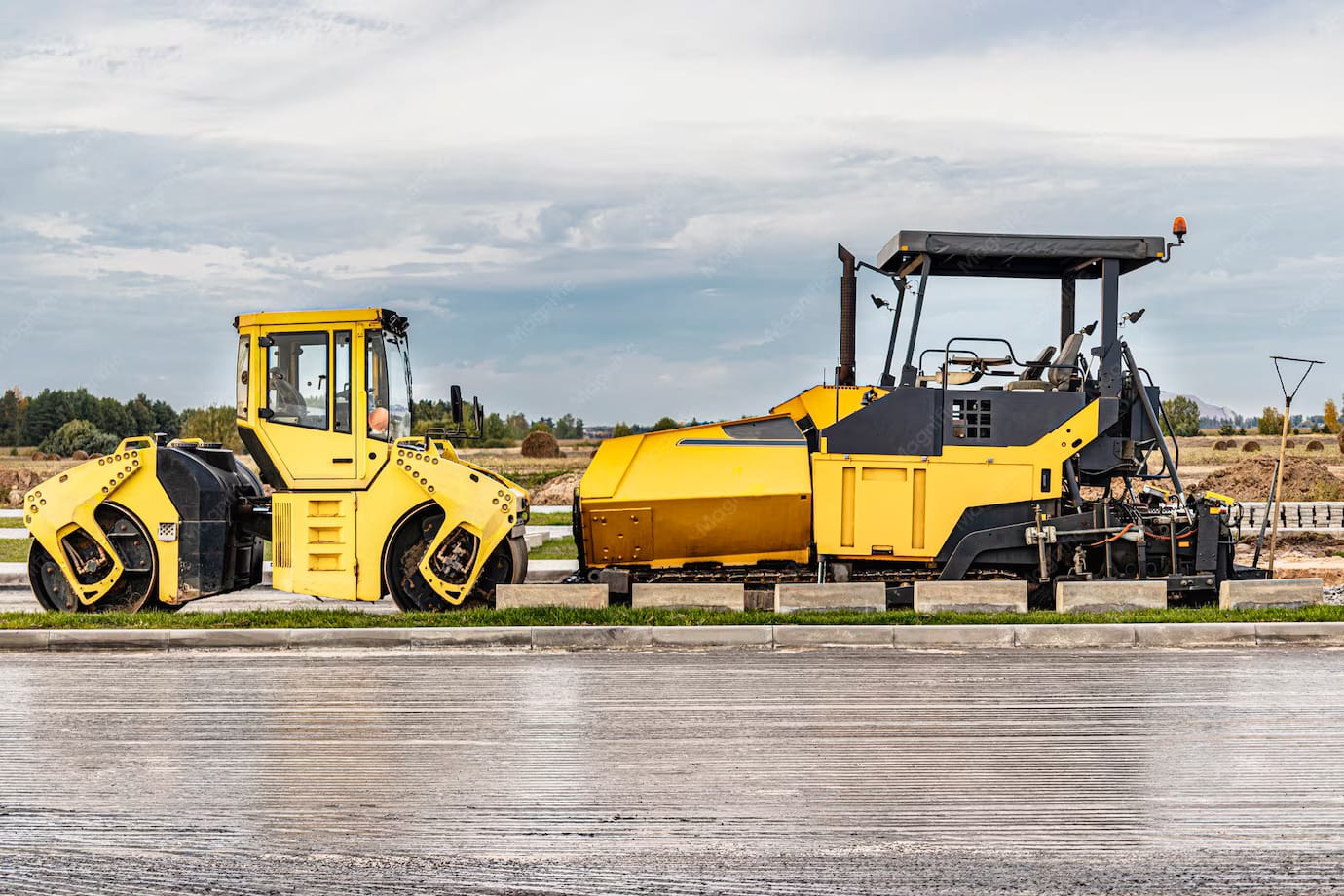
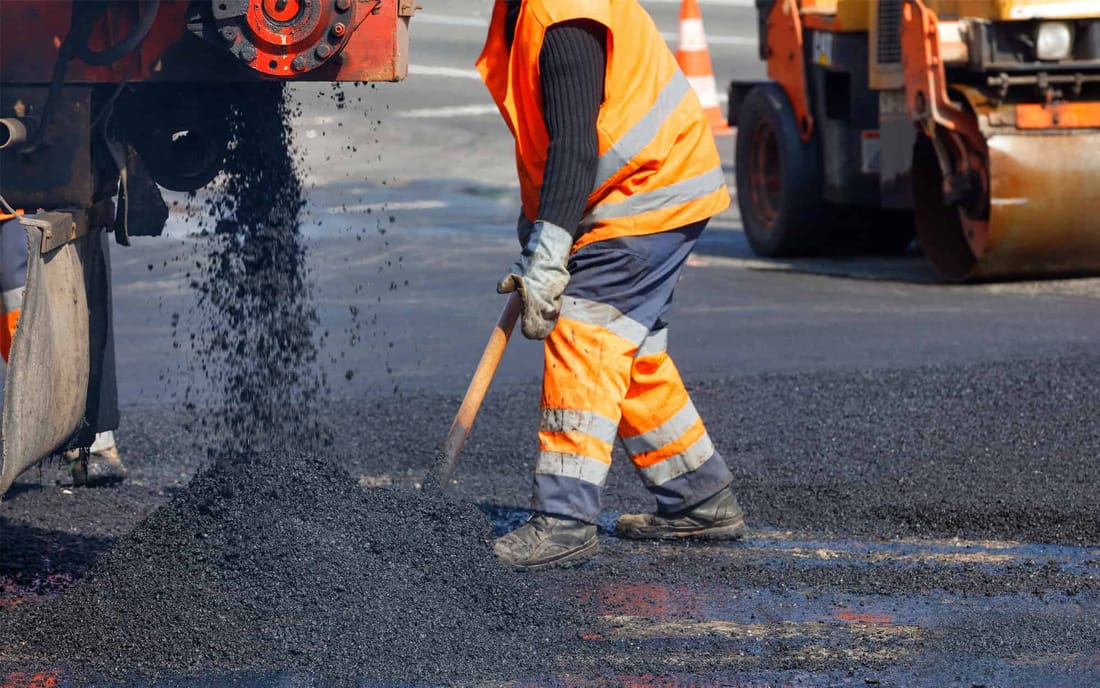
Our crews begin by fine grading and compacting the base, then we install asphalt in multiple lifts. Each lift is laid at a controlled temperature and compacted to a tight density tolerance with steel drum and pneumatic rollers. Proper compaction is what keeps your pavement from deforming under loaded axles. We pay special attention to joints between paving passes and transitions to existing pavement, because these areas are common failure points if not treated correctly.
Drainage details are handled during installation. We set inlets and manholes to finished grade and slope the pavement so water moves away from buildings and loading docks. At older facilities around Bragg Boulevard and Murchison Road, we often correct long-standing ponding problems by adjusting grades during repaving, which reduces slip hazards and extends the life of the asphalt. We conclude with line striping that reflects your actual traffic patterns, including designated truck lanes, staging areas, and pedestrian zones.
Cost Drivers for Heavy-Duty Asphalt in Fayetteville
Industrial asphalt paving costs are driven by more than just square footage. At Precision Asphalt Fayetteville, we walk you through the specific factors so you understand where every dollar goes and can budget accurately.
The biggest cost component is usually the pavement section thickness and base preparation. Areas that handle 80,000 pound tractor-trailers or container loads need significantly more structure than car-only parking. If testing shows soft or saturated subgrade, we may need undercuts, stabilization, or thicker aggregate base. This costs more upfront, but it prevents early failure and expensive downtime later.
Other cost drivers include site access and phasing (for example, working around 24-hour operations near the I-95 industrial corridor), drainage improvements, demolition of old failed pavement, and special-purpose features like fuel-resistant surface mixes or reinforced dumpster pads. We also look for ways to save you money, such as reusing sound portions of the existing base, or phasing the project so you can keep revenue-generating operations running while sections are rebuilt.
By the time we present a proposal, you will see how thickness, materials, drainage work, and phasing affect both cost and performance. This transparency helps Fayetteville facility managers justify the project internally and compare options fairly.
Common Industrial Pavement Problems and How We Prevent Them
Facilities around Fayetteville see a consistent set of pavement issues: rutting in truck lanes, alligator cracking near docks, potholes where water sits, and crumbling edges along gravel shoulders. Precision Asphalt Fayetteville designs heavy-duty pavement specifically to avoid these familiar problems.
Rutting often happens when asphalt is too thin, the mix is too soft, or the base is underbuilt. We counter this with correct pavement thickness, stiffer industrial mix designs, and strict compaction standards. Alligator cracking near loading docks usually points to base failure under repeated heavy loads. For these areas, we design thicker structures and may recommend a combination of asphalt and concrete or localized full-depth reconstruction rather than simple overlays.
Water is another frequent culprit. Poor drainage leads to saturated bases, which accelerate cracking and potholes. When we evaluate your site, we look at roof drains, downspouts, slopes, and surrounding grades, then adjust the paving plan so water has a clear path away from high-value pavement areas. Finally, we help you set up a maintenance plan that includes scheduled sealcoating where appropriate, crack sealing before winter, and targeted patching. This level of care keeps your heavy-duty pavement working longer, reduces liability, and protects your overall facility investment.