Home › Commercial Gravel-to-Asphalt Conversions
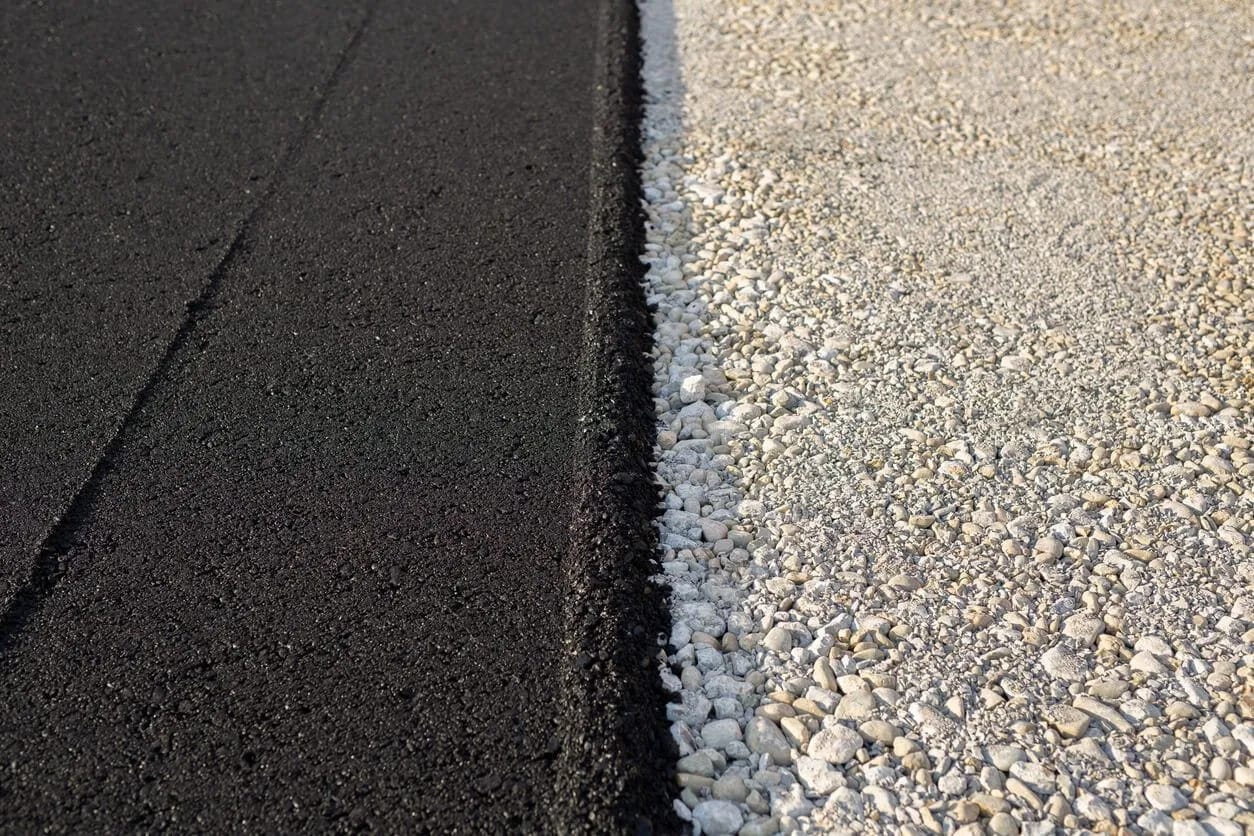
Transform dusty gravel lots into professional blacktop with commercial gravel to asphalt conversions in Fayetteville, NC. We evaluate your existing base, correct drainage issues, and install durable asphalt surfaces that are cleaner, easier to plow, and more inviting for customers and employees.
Precision Asphalt Fayetteville provides professional commercial gravel to asphalt throughout Fayetteville, NC, North Carolina and the surrounding area. Our licensed, insured crew delivers safe, clean, on-time work with a free estimate before anything begins. Call (910) 659-3742 or request your free quote.
Turn Your Gravel Lot Into a Professional Asphalt Surface
If you manage a business in Fayetteville, NC, you already know a gravel parking lot can be a daily headache. Dust on customer vehicles, potholes after every hard rain, muddy entrances, and constant regrading all add up to higher maintenance costs and a less professional first impression. Precision Asphalt Fayetteville specializes in commercial gravel-to-asphalt conversions that turn those problem areas into smooth, durable, and well‑drained asphalt lots your customers and employees can actually enjoy using.
Our team focuses on commercial sites around Fayetteville, from older strip centers along Bragg Boulevard and Raeford Road to newer industrial buildings near I‑95. We understand the local red clay, the way summer thunderstorms wash out gravel, and how truck traffic from nearby distribution centers affects pavement design. When we convert a gravel surface to asphalt, we do more than just pave over what is there. We rebuild the base as needed so the new asphalt can handle real-world traffic, including delivery trucks, service vehicles, and daily customer parking.
Whether you operate a small storefront, a church, a medical office, or a multi-building complex, we tailor each gravel-to-asphalt project to your layout, traffic patterns, and budget. Precision Asphalt Fayetteville walks you through the options in plain language, so you can make confident decisions and get a finished lot that works for your business, not just for one inspection.
How Commercial Gravel-to-Asphalt Conversions Actually Work
A successful commercial gravel-to-asphalt conversion starts with a good evaluation of what you already have. We begin with a site visit where we check the existing gravel depth, compaction, drainage paths, and problem areas like constant puddles or soft spots. In Fayetteville, the subgrade often includes expansive clay. If we see pumping or rutting after rains, we know the subgrade will need improvement before any asphalt goes down.
Next, we plan and reshape the parking lot. Our crew uses graders and skid steers to cut high spots, fill low areas, and establish the correct slope so water runs toward planned drainage points instead of toward building entrances or neighboring property. For commercial properties, we typically aim for between 1 and 2 percent slope, steep enough to move water but gentle enough for pedestrians and carts. If your current gravel lot has informal drive lanes that cause traffic conflicts, we can redesign the layout during this stage so the final asphalt striping keeps vehicles flowing safely.
Base preparation is where many conversions succeed or fail. If your existing gravel is clean, thick enough, and well compacted, we may be able to reuse much of it as part of the base, which can save on cost. However, if we find mixed clay, organics, or very thin gravel on top of soft soil, we will undercut and remove the unsuitable material. We then install new stone base, usually a graded aggregate base (GAB) that locks together tightly when compacted. This is especially important on commercial sites that see heavier vehicles like box trucks or small semis.
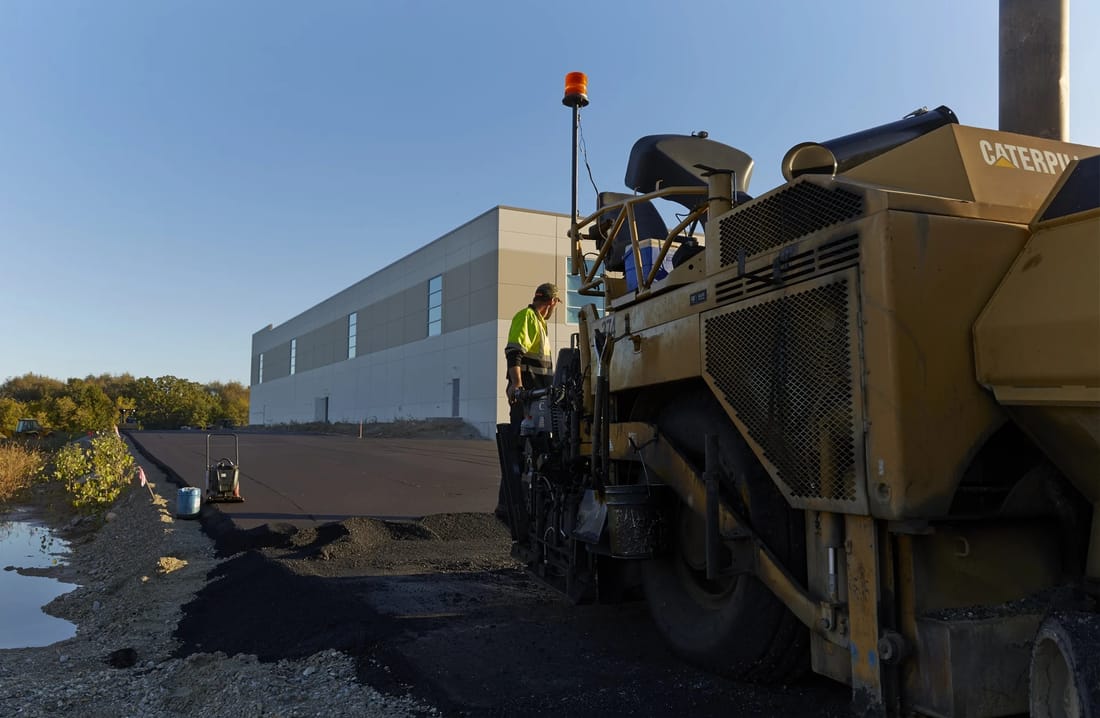
After grading and base installation, we compact in multiple passes using vibratory rollers to achieve the density needed for commercial traffic. Only once we are satisfied with base stability do we install the asphalt layers. In a typical Fayetteville commercial gravel-to-asphalt project, we place a base course of asphalt for strength, then a finer surface course for smoothness and appearance. The exact thickness depends on expected use, which we discuss with you before we start.
Material Choices, Design Options, and What Affects Cost
Every gravel-to-asphalt conversion has a few key choices that affect both performance and price. Precision Asphalt Fayetteville explains these in straightforward terms so you understand where your money is going.
Asphalt thickness and mix type are two of the biggest drivers. A light-use office or retail lot with mostly cars can often use a thinner asphalt section than a lot that regularly sees delivery trucks, dumpsters, or forklifts. For example, a small medical office may only need a modest asphalt base layer with a standard surface mix, while a distribution yard might require a thicker base course and a heavy-duty surface mix designed to resist rutting under turning truck tires.
Existing conditions under the gravel have a major impact on cost. If your lot was originally built with proper stone base and has simply been topped with gravel for years, the conversion can be more straightforward. We might only need to fine grade, compact, and add a smaller amount of new base stone before paving. On the other hand, many older Fayetteville properties, especially those that started as temporary storage yards, were created by spreading gravel directly on native soil. In these cases, we may need to remove muddy or organic layers, improve drainage, and rebuild the base to prevent future failures.
Drainage upgrades can be another important cost factor. If we see that water currently ponds in the middle of your gravel lot or runs into neighboring yards, we may recommend adding swales, French drains, or additional catch basins. While these items add to the initial budget, they significantly extend the life of your asphalt. Standing water is one of the fastest ways to break down a paved surface, especially with the hot sun and sudden storms we get in the Sandhills region.
Design options are not just structural. You can decide on parking layout, ADA compliant routes, dumpster pad location, and where to place heavy traffic zones like loading areas. During a commercial gravel-to-asphalt conversion, it costs much less to adjust these details while we are grading and paving than to rework them a few years later. We coordinate striping plans in advance so your final lot uses the available square footage efficiently and meets local parking and accessibility requirements.
Local Issues in Fayetteville and How We Prevent Common Problems
Fayetteville’s climate and soil conditions create specific challenges for commercial gravel-to-asphalt conversions, and Precision Asphalt Fayetteville designs around them from the start. Our hot summers, frequent storms, and occasional freeze-thaw cycles can all stress pavement if the base and drainage are not right.
Soft subgrade is one of the most common issues we encounter under older gravel lots, especially on properties along low-lying areas or near creeks. When trucks repeatedly drive over a weak base, ruts and potholes form quickly. In a conversion project, we probe and test the subgrade to identify areas that need stabilization. In some cases, we use geotextile fabric between the soil and new stone base to keep the stone from pumping down into the clay. In heavy-use areas such as dumpster approaches, drive thru lanes, or loading docks, we may recommend additional base thickness or a stronger asphalt mix.
Another frequent problem in the Fayetteville area is poor drainage that causes water to sit along building fronts or at lot entrances. During a conversion, we carefully set grades to steer water away from doorways and toward drains or landscaped areas that can handle runoff. If your current gravel lot already creates issues for neighboring properties during storms, we can design the asphalt surface and drainage improvements to reduce those impacts and help keep you in compliance with local regulations.
We also pay close attention to transitions. Commercial lots often tie into city streets, alleys, existing concrete at loading docks, or older patches of asphalt. If these transitions are not built and compacted correctly, they become the first place to crack or settle. Our crews make clean saw cuts, adjust base stone depths at those interfaces, and compact meticulously at the joints so vehicles do not experience harsh bumps and the pavement does not unravel at the edges.
Because many Fayetteville businesses must stay open during construction, we plan phasing to maintain access where possible. For larger lots, that may mean paving in sections so you always have some parking available. We coordinate with you on delivery schedules, busy times of day, and any special needs, such as ambulance access for medical facilities, so the conversion process is as smooth as the finished asphalt.
Planning, Timeline, and What to Expect When You Hire Us
When you contact Precision Asphalt Fayetteville about a commercial gravel-to-asphalt conversion, we start with a walk-through of your property and a conversation about how you actually use the space. We want to know where employees park, where delivery trucks stage, which entrances customers prefer, and any recurring issues you have noticed with your current gravel surface. This helps us design a pavement structure and layout that fits your operations instead of forcing you to adapt to the pavement.
After the site visit, we provide a written proposal that outlines the scope of work, layer thicknesses, any drainage improvements, and how we plan to handle access during construction. For many small to mid-size commercial lots in Fayetteville, active paving work can often be completed in one to three days, depending on the weather, the amount of base repair needed, and whether we are phasing the project to keep part of the lot open.
You can expect some noise and dust during grading and base work, although the final asphalt installation is relatively quick. We typically recommend keeping vehicles off the new surface for at least 24 hours, sometimes longer for heavy trucks, so the asphalt can cool and gain strength. We also discuss simple maintenance steps you can take in the first year, such as avoiding tight turning of heavy trucks when the pavement is hot, to help your new lot last.
Throughout the project, our crew leader remains your main point of contact on site. If conditions under the gravel are different from what we expected, we show you the issue, explain the options, and get your approval before making changes that affect cost or schedule. This transparency is especially important on conversions, where hidden subgrade conditions can occasionally surprise even experienced contractors.
If you are ready to turn your dusty, rutted gravel lot into a clean, clearly marked asphalt surface that reflects the professionalism of your business, Precision Asphalt Fayetteville is ready to help. We combine local knowledge, careful base preparation, and practical design choices to deliver commercial gravel-to-asphalt conversions that hold up in Fayetteville’s real-world conditions.