Home › Asphalt Sealcoating & Crack Filling
Protect your driveway from sun, rain, and vehicle leaks with professional asphalt sealcoating in Fayetteville, NC. Our team cleans the surface, fills cracks, and applies an even, deep black sealer that boosts curb appeal and helps your asphalt last longer.
Precision Asphalt Fayetteville provides professional asphalt sealcoating throughout Fayetteville, NC, North Carolina and the surrounding area. Our licensed, insured crew delivers safe, clean, on-time work with a free estimate before anything begins. Call (910) 659-3742 or request your free quote.
Practical Protection for Fayetteville Asphalt Surfaces
Asphalt in Fayetteville takes a beating from summer heat, sudden thunderstorms, and occasional winter freezes. If your driveway or parking lot is turning gray, showing hairline cracks, or losing its smooth texture, it is at the stage where asphalt sealcoating and crack filling can still prevent expensive tear-out and repaving. Precision Asphalt Fayetteville focuses on this preventative work so property owners get the longest possible life from their pavement.
We work on residential driveways in neighborhoods like Jack Britt and College Lakes, small commercial lots on Raeford Road, and larger HOA or church lots around Skibo Road. Each type of property wears differently. For example, a shaded older driveway near Haymount might see more moss and moisture damage, while a busy strip center lot gets deep surface wear from turning traffic and delivery trucks. We look at how your pavement is actually used before deciding what sealcoat mix and crack repair method make sense.
Sealcoating is not just making blacktop look black again. It adds a thin protective barrier that slows oxidation, blocks UV damage, and helps keep water and vehicle fluids from soaking into the asphalt. Crack filling stops that water from running straight to the base layer and washing out the foundation. When these two services are planned together on the right schedule, they push major repair or full replacement many years down the road.
What Our Asphalt Sealcoating Process Looks Like On Your Property
On a typical Fayetteville residential driveway, Precision Asphalt Fayetteville starts by blocking off access and walking the pavement with you. We flag any areas that are beyond sealcoating and crack filling, such as severe alligator cracking or sections where the base has failed and moves underfoot. Those are noted separately so you have a clear picture of what sealcoating will help and what might need patching.
Next, we handle surface preparation. We use mechanical blowers, stiff brooms, and, if needed, power washers to remove sand, pine needles, and caked-on dirt. Parking lots along busy Fayetteville roads tend to collect fine sand and auto debris, which can keep sealer from bonding. On oil spots, such as where cars usually park at apartment complexes or small retail centers, we apply an oil spot primer so the sealer bonds properly instead of peeling.
We then apply the sealcoat. For most work we use a coal tar or asphalt emulsion sealer that meets commercial specs, mixed with sand and latex additives when more traction and durability are needed. Residential driveways usually get two thin coats, sprayed or squeegeed, with brush work along edges and around brick, curbs, and garage doors. Larger commercial lots often receive a spray application followed by a second coat on high-traffic lanes like entrances, drive lanes in front of storefronts, and dumpster areas.
Curing time is essential in our climate. In Fayetteville, we schedule work to avoid forecast rain and to take advantage of warm, dry stretches. Most driveways can handle light foot traffic after 6 to 8 hours and vehicle traffic after about 24 to 48 hours, depending on temperature, humidity, and shade. For busy commercial properties, we can phase the job so only part of the lot is closed at a time, which keeps customers and deliveries moving while the sealer cures.
How Crack Filling Really Works (And When It Does Not)
Crack treatment is where a lot of the long-term savings happen. Precision Asphalt Fayetteville distinguishes between small surface checking and structural cracks. Hairline surface checking may get sealed by the sealcoat itself. Structural cracks, usually wider than 1/4 inch or that run long distances, need dedicated crack filling before we ever open a bucket of sealer.
We start by cleaning each crack thoroughly. In parking lots with a lot of sand or soil, we may use a wire wheel or compressed air lance to clear debris down into the crack. Any grass or weeds growing through are removed, since leaving them will push the filler back out later. On some older Fayetteville driveways where erosion has silted into the cracks, cleaning is a big part of the time involved.
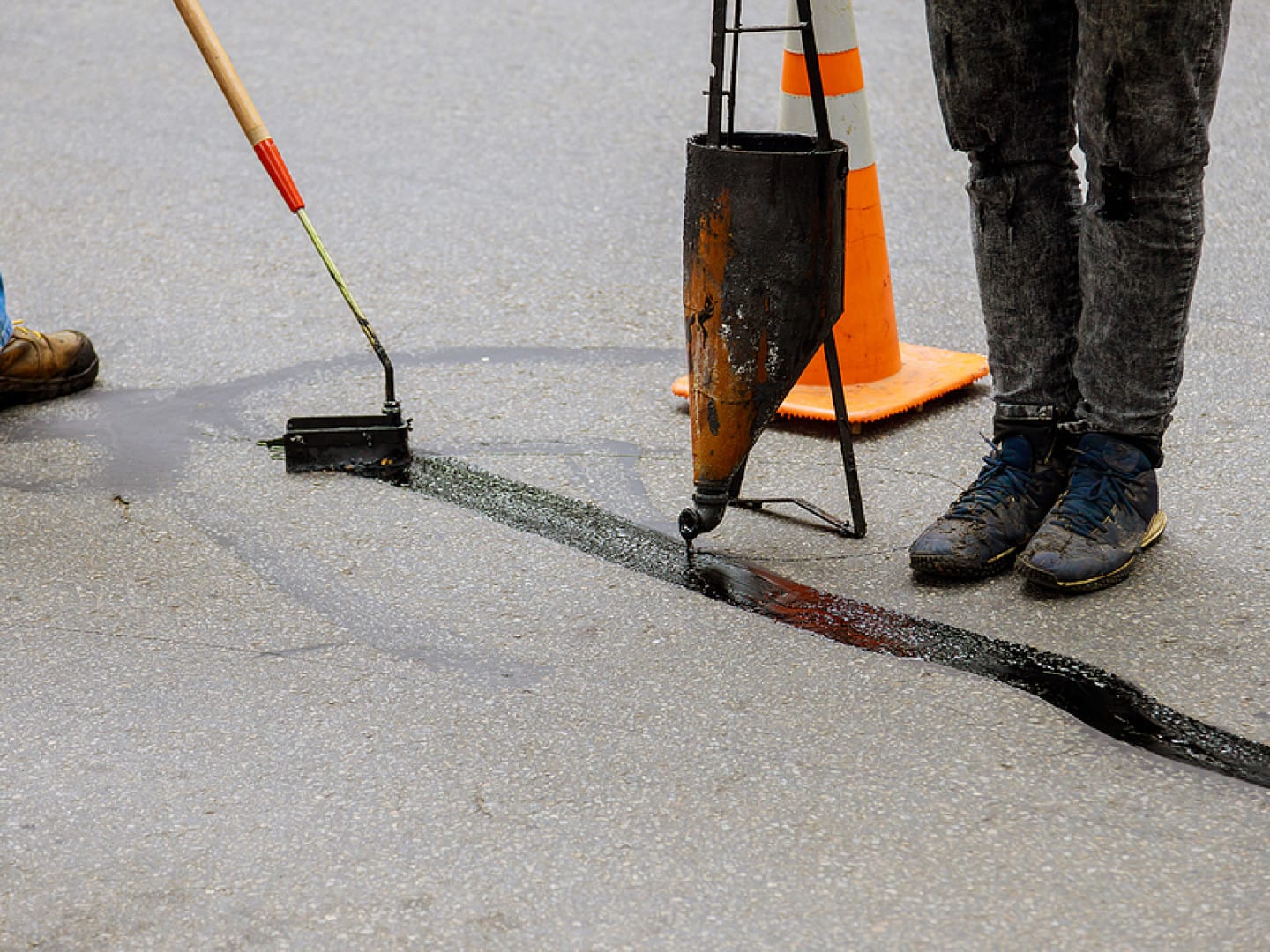
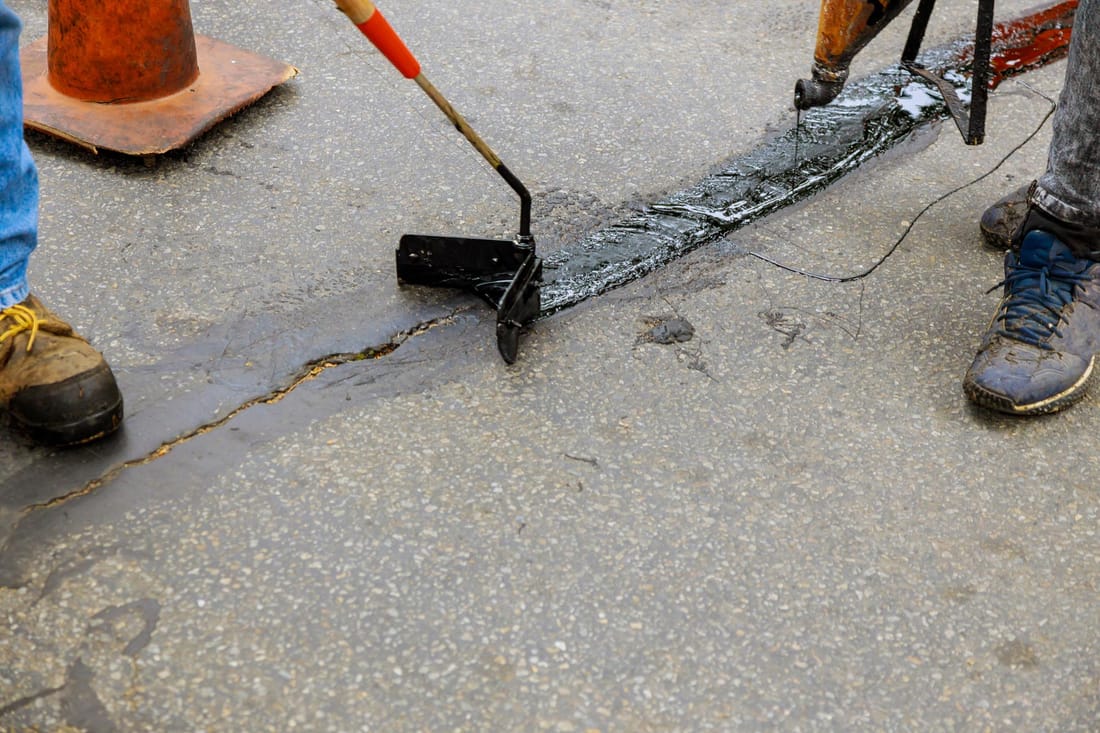
Once clean, we apply a hot rubberized crack sealant for most load-bearing cracks. It is heated to the manufacturer’s specified temperature, then poured or applied with a wand so it flows down into the crack and bonds to the walls. As it cools, it remains flexible, which allows it to move with seasonal expansion and contraction without splitting open again. For smaller or non-structural cracks, especially on residential work, we may use a cold pour crack filler that is more cost-effective.
There are limits. If your pavement has wide, interconnected “alligator” cracking, that area usually indicates base failure and cannot simply be filled. In those cases, we will recommend cutting out and patching those sections before sealcoating so you are not paying to coat a surface that will crumble anyway. Being direct about what crack filling can and cannot fix is part of how we avoid wasting your money on short-term band-aids.
Cost Factors Fayetteville Owners Should Understand
Pricing for asphalt sealcoating and crack filling is rarely one-size-fits-all. Precision Asphalt Fayetteville looks at several specific factors when we prepare a quote so you know exactly what is driving the number.
First, total square footage and layout have a big impact. A long, straight driveway in a newer subdivision off Cliffdale Road can be coated faster and more efficiently than a tight, curved driveway with multiple parking pads and walkways in an older Haymount property. Commercial lots with islands, loading docks, and complex striping patterns also take more time to mask, edge, and work around.
Second, surface condition matters. A relatively smooth, intact surface that is only slightly gray is straightforward. A surface with heavy oxidation, rough texture, or a lot of isolated cracks requires more material and labor. Deep crack repair, oil spot priming, localized patching, and extra coats in high-wear zones all add cost but also extend how long the work will last.
Third, timing and traffic control influence price. Work at a busy convenience store or medical office near Skibo Road often needs night or weekend scheduling, cones, barricades, and clear signage. Those planning and labor costs are different from a simple residential job where the homeowner can keep vehicles off the driveway for two days.
We give written estimates that break out line items where it makes sense, such as separate pricing for crack filling, sealcoating, and any patching or striping. That way Fayetteville owners can see what they are paying for and make decisions about phasing work over more than one season if needed.
Common Local Problems And How We Handle Them
Fayetteville’s climate creates some specific pavement issues that we plan for in our sealcoating and crack filling work. High summer temperatures soften asphalt binders, especially in darker, south-facing driveways. When afternoon storms throw heavy rain on hot pavement, water can find its way into tiny surface openings and start undermining the base. Precision Asphalt Fayetteville times applications to allow proper cure between such events as much as possible and selects sealers with additives suited to high-heat conditions.
Another issue is the mix of clay and sandy soils in Cumberland County. Poor drainage along the sides of driveways or lots can cause water to sit at the pavement edge. Over time, this causes edge cracking and raveling. When we see this, we may recommend extra crack sealing at the edges, minor grading improvements, or extending pavement slightly so the finished edge is better supported. On rural properties outside the city where driveways meet gravel shoulders, we often suggest compacted stone shoulders to back up the asphalt and reduce edge breaks.
Tree roots are a frequent problem on older streets with mature oaks and pines. Sealcoating will not stop root uplift, but during our inspection we identify those areas. Sometimes we can saw-cut and patch a heaved section before sealcoating the rest. In other cases, we advise the owner to consider root management or accept a future localized repair. Our goal is not to oversell sealcoating as a cure-all but to place it correctly in the overall maintenance plan for your pavement.
Finally, traffic patterns vary. Apartment complexes and small shopping centers around Fayetteville often have tight turning radiuses where vehicles grind the surface in the same locations daily. In these areas we may use a more robust sealer mix with added sand for traction and durability, and in some cases apply a third coat just at the entrances and tight corners, rather than across the entire lot.
What To Expect When You Hire Precision Asphalt Fayetteville
When you contact Precision Asphalt Fayetteville for asphalt sealcoating and crack filling, we start with an on-site evaluation, not a rough guess over the phone. We measure the pavement, count and gauge cracks, look at drainage, and identify any structural issues. You receive a clear proposal that outlines the scope of work, surface preparation steps, products to be used, number of coats, and recommended curing times based on the season.
Once scheduled, we coordinate with you regarding access and timing. For homes, that means planning around your vehicle use so you are not trapped. For commercial sites, we often phase the work so customers can still reach entrances, and we can work off-peak hours when necessary. Our crews show up with the equipment and materials sized to the job, from smaller tanks and squeegees for tight residential sites to larger spray rigs and mixing tanks for expansive lots.
During the job, communication stays direct. If we uncover an area of soft base or damage that was not visible during the initial visit, we stop and discuss options before proceeding. We do not cover serious problems with sealer and call it done. After application, we set up cones and tape, provide written guidance on when you can walk and drive on the new surface, and explain what is normal during the first days of curing.
We encourage Fayetteville customers to think of sealcoating and crack filling as a routine, like roof inspections or HVAC service. In this region, a typical cycle is sealing every 3 to 4 years for driveways and every 2 to 3 years for high-traffic commercial lots, with crack filling as needed between full seal coats. With that approach, most pavements can reach or exceed their expected service life before major replacement is needed.